Chapter 2: Introduction
What is Medulla?
Medulla is a comprehensive IT management platform designed to simplify, automate and secure all the operations related to a computer park, whether in business, telework or distributed on several sites.
It is based on a real-time XMPP inventory base, allowing an accurate and up-to-date view of each station at any time, whether connected locally or remotely. This ensures constant machine connection, essential to any efficient management.

What's Medulla for?
Medulla centralizes and facilitates the following tasks:
IT management
- Automatic and real-time inventory
- Detailed view of machines and users
- Connecting to existing ITSM solutions
Remote deployment of software and scripts
- Deployment of applications, uninstallation or script execution
- Advanced planning via a Conditional staple
- Intelligent assistant for silent installations
Imagining and System Installation
- Creating generic system images, compatible with all types of hardware
- Dynamic driver management
- Deployment Unicast/multicast
- Multi-site synchronization for remote deployments
Application management and updates
- Application kiosk for users without admin rights
- Installation on request, by category
- Transparent and bandwidth-efficient updates
Remote control (LDCD)
- Opening of session or console on posts
- Secure connection even without VPN thanks to an SSH tunnel
- Real-time support, everywhere
Native telework support
- Secure access to remote stations
- No VPN addiction
- Performing all remote operations
To discover all the features and deepen your knowledge, download our additional documentation by clicking here. Click on the link to see the full documentation.User Guide

For more information, visit our website :www.medulla.fr
Who is this manual addressed to?
Public This manual is intended for anyone involved in the management of a computer fleet and the administration of information systems, including:
System and network administrators
Computer Support Technicians
Managers of the IT fleet
DSI (Directors of Information Systems)
IT project managers
Deployment operators
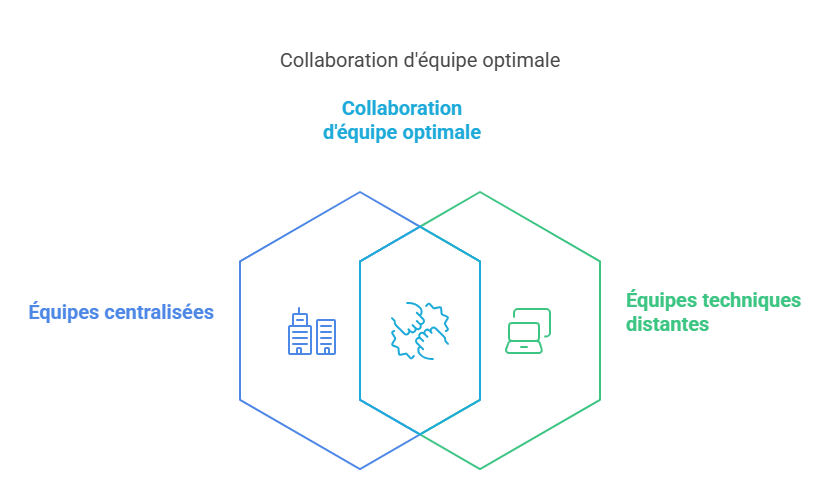
It is intended for both centralized teams and technical teams working remotely or in multisite.
Objectives of the manual
The purpose of this manual is to guide you step by step in:
- Taking charge of the Medulla interface
- Understanding its functional modules
- The configuration, use and automation of tasks
- Use of support, monitoring and audit tools
- Secure management of local and remote posts
This manual takes an approach progressive and modular : you can read it in order or directly access the sections that concern you.
Recommended prerequisites
In order to make the most of Medulla and this guide, it is recommended to have:
- Basic knowledge of Windows/Linux systems
- Concepts in network and security management
- A familiarity with the ITSM tools (optional but useful)
- An experience in teledeployment or imagining
No need to be an expert to start. The Medulla interface is designed to be intuitive, with integrated assistants to accompany you.
For more information, visit our website :www.medulla.fr
Glossary
ARS
Automatic Relay Selector is a mechanism that automatically selects the best relay to get a message or connection across.
Cluster
Server group that works together to distribute load, high availability and resilience.
Imagine
Here we talk about a system image or snapshot (disk image) of a workstation or server containing OS and software. It's used for quick deployments or restorations.
Logs
It's also called Journalization, it's a mechanism that records system events, errors, access, user actions. Very useful for audits and security.
OR
Organizational unit is a hierarchical structure in a directory (e.g. LDAP) that is used to organize machines and users.
Package
It is a set of files and resources that contain an app ready to be installed and configured on a computer or server. Packages are in deposits and are managed by package managers.
P.M.A.D.
Remote control
Relay
The relay is a component that allows messages to be passed between different points of the network.
Rules
A rule is a set of criteria to determine which relays or server should be used.
XMPP
XMPP means Extensible Messaging and Presence Protocol and is used for instant messaging, presence and real-time communication.
Conditional Grafcet
Planning method based on GRAFCET (Prophet Functional Control Step/Transition), used to automate action sequences (such as software deployment or script execution) according to specific conditions. Each step only executes if defined conditions are met, allowing dynamic and intelligent process management.
Unicast
Network communication mode where only one source sends data to a single destination. Used for point-to-point transmissions.
Multicast
Network communication mode where only one source sends data simultaneously to several specific destinations, without sending separate copies to each receiver.
VPN (Virtual Private Network)
Virtual private network to create a secure and encrypted connection between a user and a network, often via the Internet. It protects the data, hides the IP address and guarantees confidentiality.
SSH (Security Shell)
Secure communication protocol to establish a remote encrypted and authenticated connection to access a system and execute commands. Used mainly for server administration and secure file transfer.
Wake-on-LAN, WOL network alarm
Functionality allowing to start a remote computer via a network, sending a special package calledMagic Packet containing the MAC address of the target machine. Used for remote administration and machine management without having to turn them on manually.