
Retention of measures
A probe assigned to a thousand machines and measured every five minutes produces nearly three hundred thousand measures a day. Without a limit, the database would grow indefinitely.
The Retention tab, under Settings, sets how long each type of data is kept.
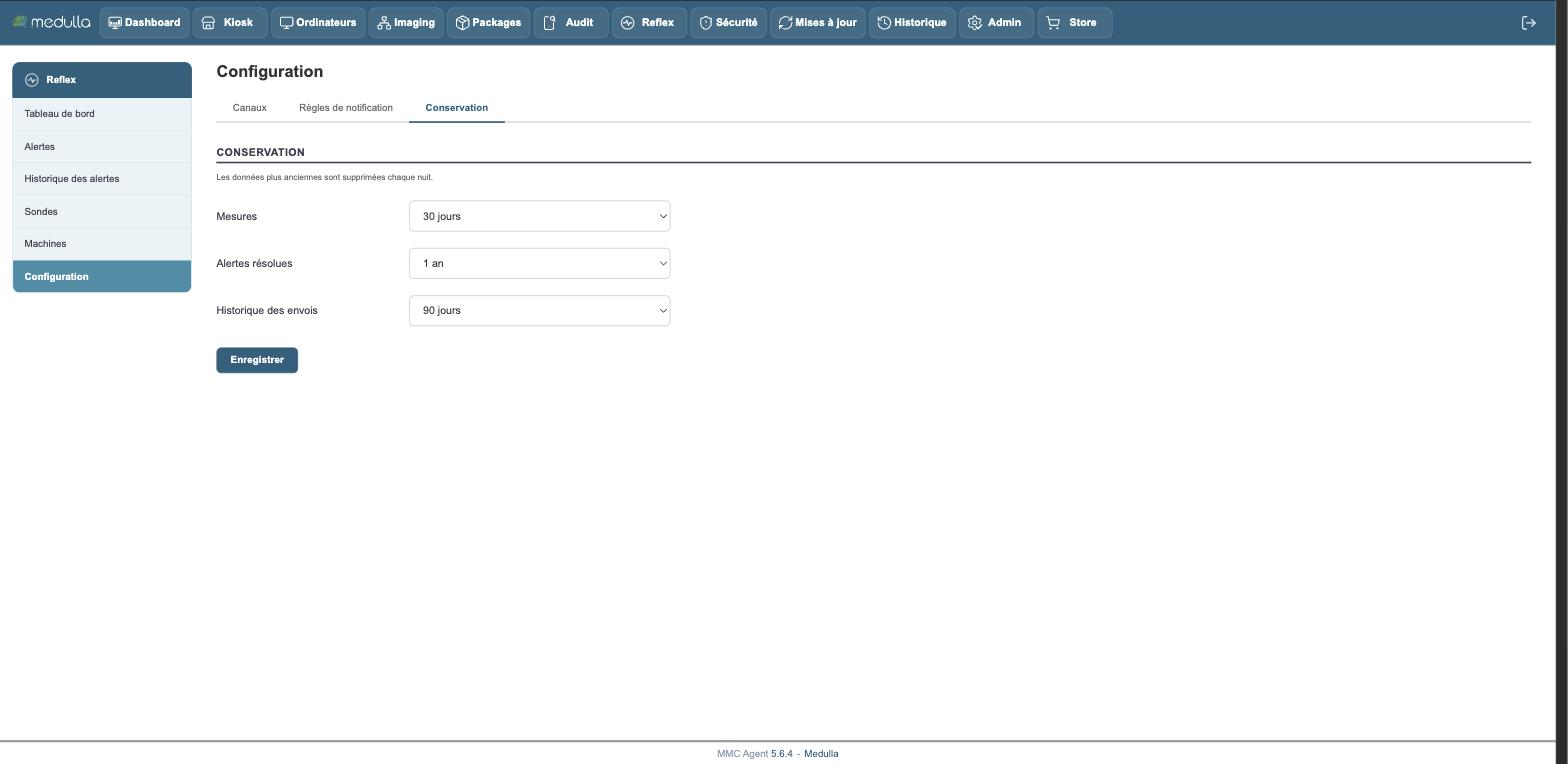
Three durations, independent of each other:
Measures — the raw readings, the ones that draw the curves. This is the largest volume. Keeping ninety days lets you compare one quarter with the next; thirty days are enough to see a drift.
Resolved alerts — the closed alerts, the ones you find in the History. They weigh little and stay useful for a long time: an alert that comes back every month can only be spotted with several months of history.
Sending history — the record of the notifications sent. Useful to check that a message was indeed sent, of no interest beyond a few weeks.
Warning: older data is deleted every night. Deletion is permanent: an erased curve cannot be rebuilt.
Choosing your durations
There is no universal right setting. Ask yourself the question the other way round: what is the oldest question you will put to this data?
If you justify a yearly budget with the load curves, keep one year of measures. If you never look beyond the past month, thirty days will cost you ten times less database for the same service.